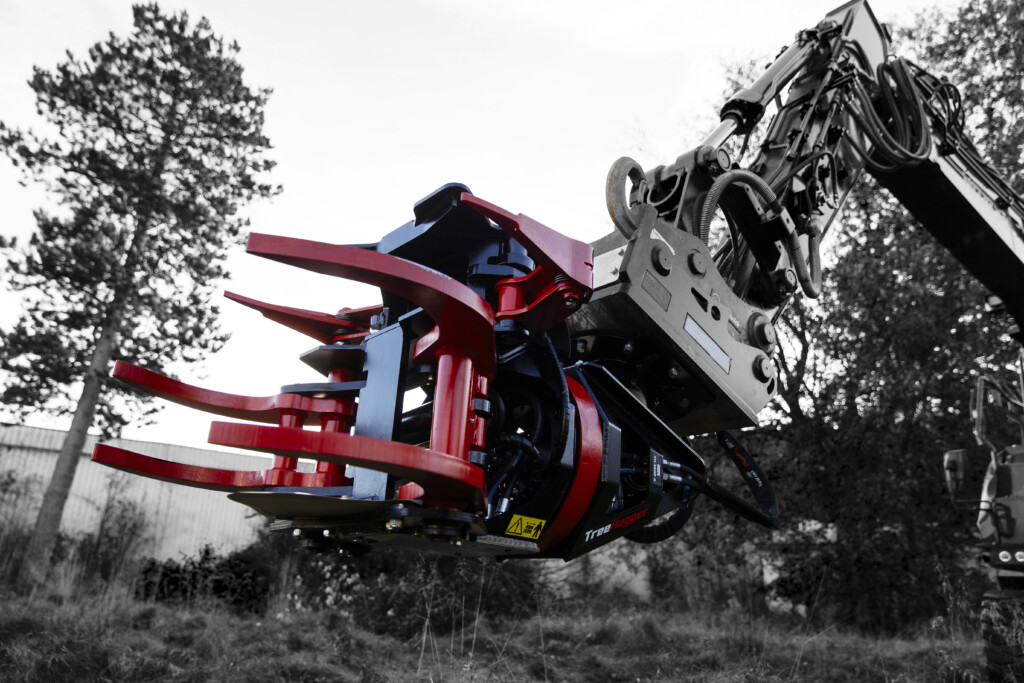
Choosing the Right TreeHugger Tree Shear
Picking the best TreeHugger model starts with your machine platform and its hydraulics. This guide walks you through the key checks, compares the TH B8 / TH B10 / TH B12-5 and TH R8 / TH R10 / TH R12-5 families, and suggests accessories by job type — so you can spec with confidence and avoid trial and error.
Quick Spec Checklist
Enhance your setup with Exator’s modular accessories:
Machine Type & Size
- Excavator operating weight (t) or loader/telehandler class
- Skid steer ROC (Rated Operating Capacity) and hydraulic package
Hydraulics
- Available flow (GPM / l/min) and pressure (psi / bar) at the attachment
- 1 vs. 2 auxiliary circuits; need for a 6/2 valve for multi-function control
Work Profile
- Typical stem diameter
- Job type: selective thinning, Right of Way (ROW) / roadside clearing, land clearing, biomass, urban lots
Handling
- Need for 360° continuous rotation (tight sites, stacking, exact placement)
Not sure about your numbers? Send your machine model and use case — we’ll size it for you.
Model Guide
Excavators — B-Series (Basic)
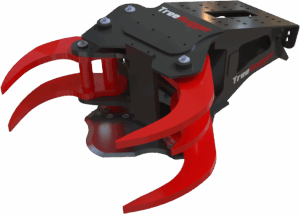
TH B8 Tree shear
Excavators 1.8–5 t
Key features: eBoost®
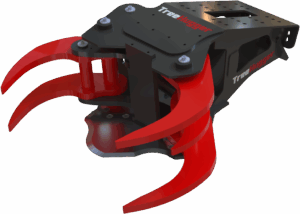
TH B10 Tree shear
Excavators 5–12 t
Key features: eBoost®
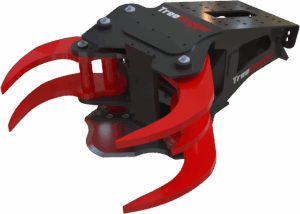
TH B12-5 Tree shear
Excavators 12–20 t
Key features: eBoost®
Tip: If your jobs demand frequent placement, stacking, or work in tight corridors, prioritize R-Series models with 360° rotation.
Excavators, Loaders, Telehandlers & Skid Steers — R-Series (Rotation)
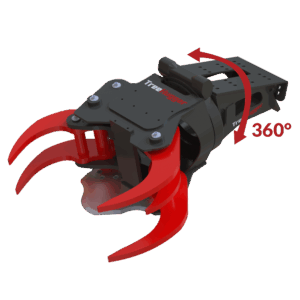
TH R8 Tree shear
Excavators 3–5 t
Key features: eBoost®, 360° rotation
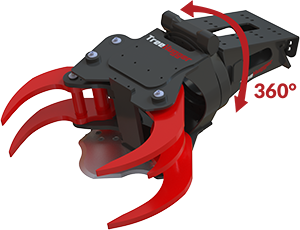
TH R10 Tree shear
Excavators 5–12 t
Key features: eBoost®, 360° rotation
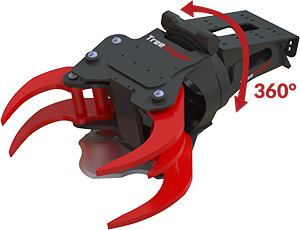
TH R12-5 Tree shear
Excavators 12–20 t
Key features: eBoost®, 360° rotation
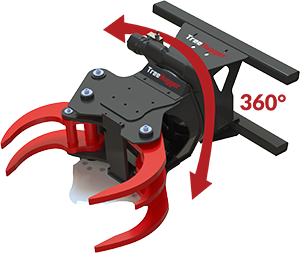
TH R8X Tree Shear
Loaders: 1,3-2,5 t
Skid steer / Telehandler lift cap. 992 lbs
Key features: 360° Rotation system, eBoost®, 8 in cutting diameter
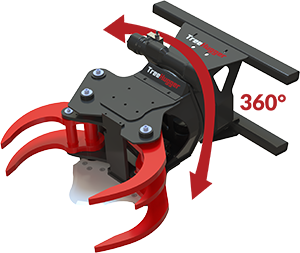
TH R10X Tree shear
Loaders: 3-6 t
Skid steer / Telehandler lift cap. 1984 lbs
Key features: 360° Rotation system, eBoost®, 10 in cutting diameter
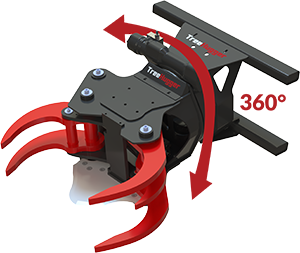
TH R12-5X Tree shear
Loaders: 6-21 t
Skid steer / Telehandler lift cap. 2870 lbs
Key features: 360° Rotation system, eBoost®, 12,5 in cutting diameter
Hydraulics: What Really Matters
Flow and pressure drive cycle speed and cutting force. eBoost® delivers up to 2× faster cycles without power loss — even on lower-flow, lower-pressure machines.
Auxiliary circuits: If you need simultaneous grip + rotation or collector control, add a 6/2 Valve.
Hose management: 360° rotation systems benefit from hose-through routing to prevent twisting.
Compatible Accessories
Enhance your setup with Exator’s modular accessories:
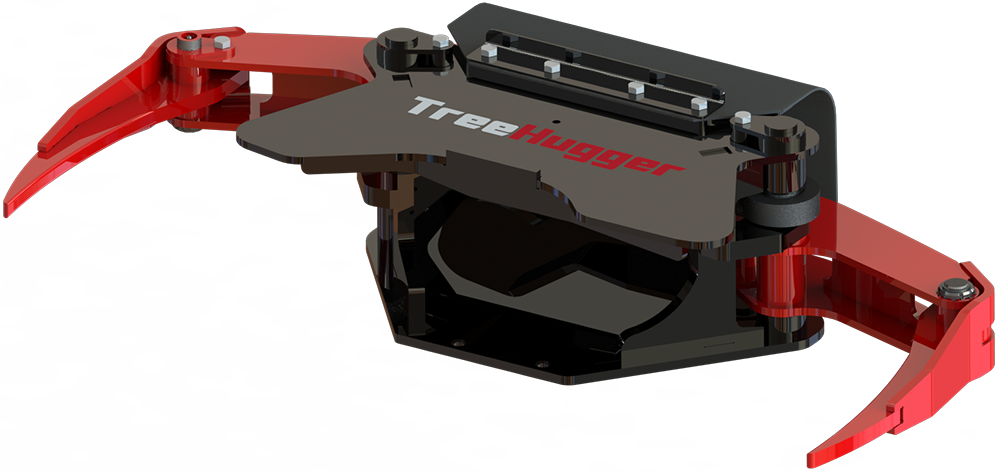
Collector
increase work efficiency
Cable Control
wired operation
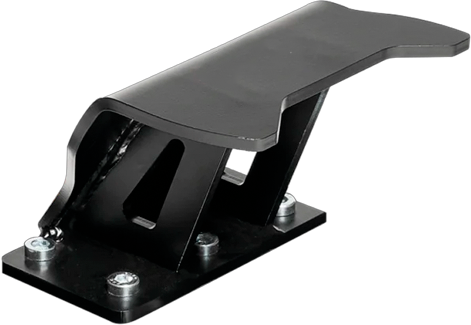
Felling Support
for large or leaning trees

Radio Control
wireless operation
FAQ (Quick Answers)
Match machine class first (weight / ROC), then verify flow & pressure at the coupler, and finally check your maximum stem diameter.
If you stack or place material frequently — or work in tight ROW / urban areas — 360° rotation saves time and machine movements
Yes. With eBoost®, many lower-flow carriers achieve fast cycles without power loss.
Next Steps
Ready to find your perfect match? Tell us your machine and job type — we’ll recommend the ideal TreeHugger model for your needs.